|
Member articles, upcoming events, and more! ͏ ͏ ͏ ͏ ͏ ͏ ͏ ͏ ͏ ͏ ͏ ͏ ͏ ͏ ͏ ͏ ͏ ͏ ͏ ͏ ͏ ͏ ͏ ͏ ͏ ͏ ͏ ͏ ͏ ͏ ͏ ͏ ͏ ͏ ͏ ͏ ͏ ͏ ͏ ͏ ͏ ͏ ͏ ͏ ͏ ͏ ͏ ͏ ͏ ͏ ͏ ͏ ͏ ͏ ͏ ͏ ͏ ͏ ͏ ͏ ͏ ͏ ͏ ͏ ͏ ͏ ͏ ͏ ͏ ͏ ͏ ͏ ͏ ͏ ͏ ͏ ͏ ͏ ͏ ͏ ͏ ͏ ͏ ͏ ͏ ͏ ͏ ͏ ͏ ͏ ͏ ͏ ͏ ͏ ͏ ͏ ͏ ͏ ͏ ͏ ͏ ͏ ͏ ͏ ͏ ͏ ͏ ͏ ͏ ͏ ͏ ͏ ͏ ͏ ͏ ͏ ͏ ͏ ͏ ͏ ͏ ͏ ͏ ͏ ͏ ͏ ͏ ͏ ͏ ͏ ͏ ͏ ͏ ͏ ͏ ͏ ͏ ͏ ͏ ͏ ͏ ͏ ͏ ͏ ͏ ͏ ͏ ͏ ͏ ͏ ͏ ͏ ͏ ͏ ͏ ͏ ͏ ͏ ͏ ͏ ͏ ͏ ͏ ͏ ͏ ͏ ͏ ͏ ͏ ͏ ͏ ͏ ͏ ͏ ͏ ͏ ͏ ͏ ͏ ͏ ͏ ͏ ͏ ͏ ͏ ͏ ͏ ͏ ͏ ͏ ͏ ͏ ͏ ͏ ͏ ͏ ͏ ͏ ͏ ͏ ͏ ͏ ͏ ͏ ͏ ͏ ͏ ͏ ͏ ͏ ͏ ͏ ͏ ͏ ͏ ͏ ͏ ͏ ͏ ͏ ͏ ͏ ͏ ͏ ͏ ͏ ͏ ͏ ͏ ͏ ͏ ͏ ͏ ͏ ͏ ͏ ͏ ͏ ͏ ͏ ͏ ͏ ͏ ͏ ͏ ͏ ͏ ͏ ͏ ͏ ͏ ͏ ͏ ͏ ͏
|
|
|
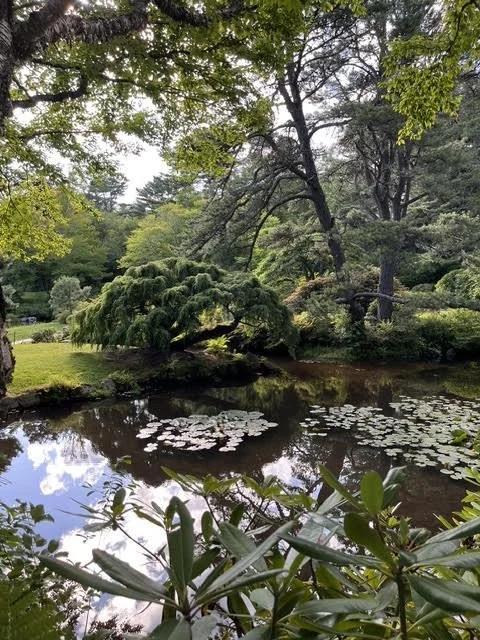
Photo by Diana Chamberlain, CAP #58 This lovely scene, complete with weeping hemlock pruned by Diana Chamberlain, is from Asticou Azelea Garden in Northeast Harbor, Maine. |
|
|
President’s MessageHappy summer! The many fantastic volunteers involved with the APA have put together a truly excellent roster of upcoming Tree Talks—on art principles, tree diseases, and more—and this newsletter is likewise full of awesome articles. Thank you to all of our writers and committees for their hard work, and thanks also to our new committee members—you all have contributed so much already, as demonstrated by all of the talks and articles we will share with our members. As always, whatever talents or enthusiasm you can share with the APA, there is a place for you. Get in touch! And enjoy this summer newsletter! Lara Miranda APA Certified Aesthetic Pruner® #65
President, Aesthetic Pruners Association apapresident@aestheticprunersassociation.org
510.658.3438
|
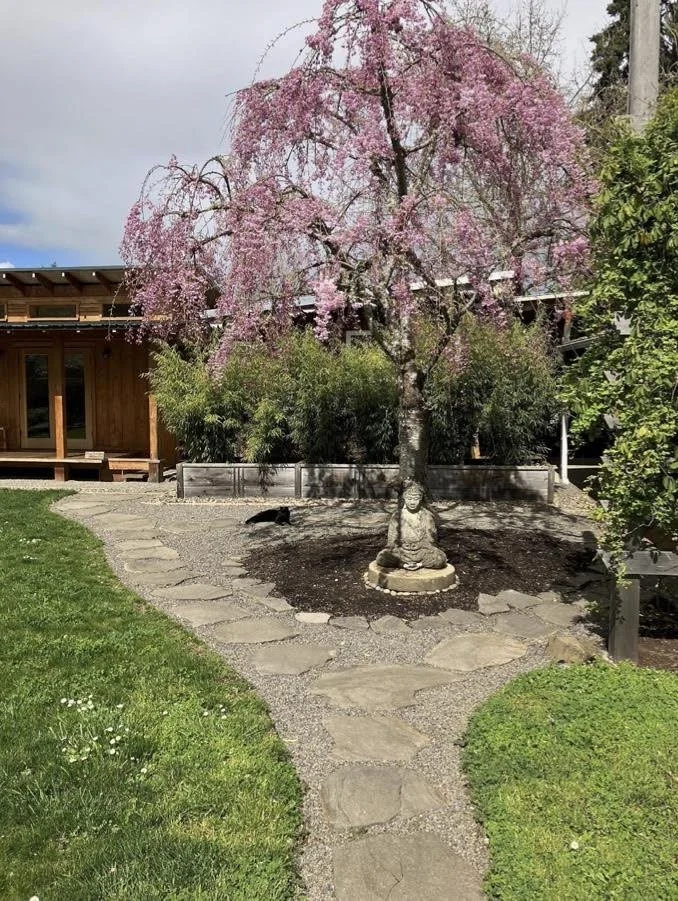
Feature ArticleThoughts on Aesthetic Pruning and Fire-Safe LandscapingAlex Senauke, APA Student Member In March, I moderated an event for the APA titled “Firescaping for Aesthetic Pruners.” While the discussion was successful, it also introduced still-unresolved questions about how best to integrate aesthetic pruning principles with fire-safe landscaping. In this article, I plan to unpack some of these questions and suggest some solutions—or at least some starting points for further conversation. Plant Selection and Maintenance Fire-safe landscaping guides often include “plant lists” which describe both “fire-prone” and “fire-safe” plants. These lists can provide a jumping-off point for gardeners and landscape professionals interested in designing resilient gardens. It is important to remember, however, that plant behavior under fire conditions may not always be directly related to species characteristics. General maintenance such as watering, deadwood pruning, and clearing leaf litter are all important ways to safeguard landscapes from accidental ignitions. As aesthetic pruners, we have the ability to influence decisions related to plant selection. Many aesthetic pruners are involved in landscape design, or they run gardening businesses alongside their pruning practice. Our training typically involves Japanese/East Asian plant material. It would be wise to compare these plant choices with fire-safe plant lists in your area. Many coniferous plants and bamboo species have been identified as high-risk plants. In San Rafael, California, junipers (Juniperus sp.) have been banned outright from use in residential gardens. Given that bamboo, pines, and junipers are common material in our field, it may be worth identifying alternatives with greater fire resistance. In addition to Japanesque plants, a growing number of aesthetic pruners have become interested in native plants. Native plants offer a number of ecosystem services beyond aesthetics, including bird and pollinator habitat. They also make excellent pruning material! While native plants have a number of benefits, their behavior under fire conditions is highly variable. In California, some plants have adapted to resist high-intensity fires, while others (such as chaparral plants) may burn readily. When designing native plant gardens for aesthetic pruning, take extra consideration around plant flammability. Garden Design Another tool in the toolkit of aesthetic pruners and Japanese gardeners is design features. I think a lot about the significance of the focal point tree in our tradition. These specimen trees are often isolated from other garden elements in distinct beds, which can be bordered by edging or stone walkways. Our practice often emphasizes the focal point tree as the centerpiece of a garden, and these receive attentive seasonal pruning. In observing a Japanesque garden in Eugene, Oregon, I noticed that the focal point trees were planted in separate beds. This helped to break up the horizontal continuity in the garden. Wildfire and ember attacks often exploit horizontal continuity to travel across landscapes; the creation of edged or raised planting areas can help offset this risk.
|
|
|
Focal point weeping sakura (cherry) tree at a zen temple in Eugene, Oregon |
|
|
That’s not to say that all Japanese garden design elements are so conducive to fire safety. When I used the image above during my talk in March, one of our speakers pointed out that the elevated wraparound porch (engawa) featured on the back building creates a gap that embers could easily penetrate. This danger is all the more pronounced around untreated timber-framed structures such as those commonly found in Japanese gardens. In adapting Japanese gardens for fire safety, members of our community should “look for the good,” but recognize that not all design elements are suitable for use in fire-prone environments. Pruning and Maintenance Beyond selection and design, the primary way that aesthetic pruners can influence fire safety is through the act of pruning. As described above, plant maintenance is a key strategy in fire-safe landscaping. Even species considered to be high-risk may be retained if proper attention is given to their ongoing maintenance. As aesthetic pruners, we should be well aware of the importance of ongoing maintenance. After all, it is often the bread and butter of our businesses! Many of our standard practices—including deadwood thinning and the creation of space/windows in the canopy—have the added benefit of reducing flammable elements. In terms of maintenance, while permaculture approaches emphasize retaining leaf litter and using organic mulches, many Japanese gardens feature bare soils or rock mulch. I believe that this speaks to the wisdom of some of our traditions dating back across history. After all, fire risk is nothing new! In terms of specific pruning techniques, it is useful to draw on existing standards from fire agencies. A common recommendation for trees is to leave a gap equal to ⅓ of the height of the tree between the ground and the lowest branch, to reduce vertical continuity. Vertical continuity—the counterpart to horizontal continuity—represents a primary means of fire transport (think ladder fuels). While this kind of clearance pruning may limit our ability to create dramatic, weeping forms common on specimens such as laceleaf maples, the exposed trunklines can help pruners and clients visualize the “line” of a tree and improve the legibility of our work. Working with Clients Lastly, I want to drive home a key point from our event in March. As aesthetic pruners, one of our primary jobs involves interfacing with clients and the public—this could be owners, garden managers, or visitors to public gardens. We often find ourselves serving as advocates for the trees we prune. At the same time, we are often the first to be consulted about landscape decisions, giving us a frontline communication role as well. Given this informal role, I want to urge aesthetic pruners to learn about both fire science and fire policy. The first category will allow us to make better decisions on the fly, particularly when clients want to perform extreme or gratuitous pruning or removal decisions out of concern about fire. There is a good deal of strong sentiment and misinformation circulating these days, and I predict that our trees will be increasingly impacted in the coming years. At the same time, we ought to be able to recognize risk and communicate it to our clients, even in cases of cherished or highly-valuable plant material. If we take responsibility for educating ourselves, we can provide the best information to our clients. In terms of fire policy, I want to underscore the complexity of regulations at present. I’ve already mentioned the blanket species restrictions adopted in San Rafael. Many other cities and counties—including Berkeley, California—are using defensible space laws to regulate trees, shrubs and plants around the homes. And state regulations continue to be hotly debated across the western United States. As aesthetic pruners, it is not necessarily our job to question the wisdom of these policies. Again, it goes back to considering what’s best for our clients. We shouldn’t charge our clients for ongoing maintenance according to a five-year plan if we know that a tree will need to be removed for policy compliance. We may need to set aside our personal feelings in these cases. Do you know the different policies that are in effect when you travel from Oakland, to Berkeley, to Richmond, to San Rafael in the course of an average workday? These policies are publicly available, but they can be hard to track down and are drafted in legalese. Even so, I advise that aesthetic pruners begin to familiarize themselves with codes in their area. To conclude, I want to share a list of resources that I have found helpful as I developed this article: “Professional wildfire mitigation competency: a potential policy gap” - This article lays out the argument that green sector professionals ought to receive specialized training in wildfire science and mitigation. Wildfire Risk Reduction Qualification (WRRQ) - This new credential, offered by the International Society of Arboriculture (ISA) through regional chapters, certifies arborists in basic wildfire science and best practices for tree care professionals. It has been offered by the Pacific Northwest regional chapter, and demand is high nationwide. Fire Safe Marin - While nominally specific to Marin County, California, this organization offers a wealth of resources about fire-safe landscaping, design choices, and vegetation management. If you haven’t checked them out before, they are a great starting place for folks interested in learning more about wildfire mitigation.
|
Feature ArticleJapanese-style pruning with Masa MizunoKunyu (George) Zhang, APA Associate Member Masa Mizuno, an international Japanese garden consultant, has taught several pruning and stone-setting classes at the Conifer Garden in the Oregon Garden (Silverton, Oregon) through Clackamas Community College. The Conifer Garden is one of the oldest and most respected reference gardens of the American Conifer Society. Masa also recently retired after serving as a consultant to the Seattle Japanese Garden for more than three decades. In early April, Masa led a hands-on pruning class focusing on several plants in the Conifer Garden. Portland and the surrounding areas experienced an unusually warm winter in 2026, and Japanese maples (Acer palmatum) had already leafed out by the time of the class. The featured tree was 'Emerald Lace,' a vigorous weeping dissectum cultivar that had not been meticulously pruned in previous years. Typically, 'Emerald Lace' develops an irregular, semi-upright yet spreading habit with long, pendulous branches.
|
|
|
Masa Mizuno working on the ‘Emerald Lace’ Japanese maple |
|
|
Masa began pruning from the back of the tree to gain access to the interior canopy. He instructed students to enhance the tree's natural cascading form by first removing dead, damaged, and diseased branches. Like many weeping dissectum maples, this 'Emerald Lace' had developed a dense interior canopy. Working alongside the students, Masa removed crossing branches as well as interior branches that had become heavily shaded by the outer canopy, explaining that these weakened branches were unlikely to remain productive. Most of the pruning consisted of removal cuts, supplemented with selective reduction cuts. The tree's natural tiered structure was carefully preserved throughout the process. Masa then applied a combination of heading cuts and reduction cuts to lift the weeping branch tips off the ground, anticipating approximately 12 inches of new growth during the coming growing season. He also prefers to partially reveal the trunk, allowing viewers to better appreciate its form and character. A medium-sized moss-covered boulder sat directly in front of the 'Emerald Lace.' Masa instructed the students to remove the moss to expose the boulder's natural surface and pattern. He explained that Japan is home to approximately 1,800 to 2,500 species of mosses, while the Pacific Northwest supports an estimated 700 to 1,000 species. However, he noted that not every moss enhances a garden aesthetically. The moss covering this particular boulder lacked the refined texture of sheet moss (Hypnum and Thuidium spp.) and the soft, velvety appearance of cushion moss (Leucobryum glaucum). Joking with the class, Masa referred to these coarse mosses as "weeds" that conceal rather than enhance the beauty of the stone.
|
|
|
Masa and students working on the ‘Emerald Lace’ Japanese maple |
|
|
Because the Conifer Garden is a collection garden at the Oregon Garden rather than a traditional Japanese garden, Masa did not teach conventional Japanese pruning techniques in a strict sense, as that would have been out of context. Instead, the class focused on Japanese-style pruning principles adapted to the landscape and purpose of the garden. Personally, I think it would be even more accurate to describe his approach as Japanese-inspired Pacific Northwest pruning. My limited experience learning from Masa aligns beautifully with his philosophy, expressed on the Seattle Japanese Garden website: "Authenticity of a Japanese Garden is not a style of pruning. It's about creating space to appreciate space—between trees, plants, the ground, and the sky." He also writes that "the essence of a Japanese Garden is to learn, to bring nature into our shifting urban grounds, and then maintain." Those ideas were evident throughout the class, where every pruning decision was guided not by rigid rules but by an appreciation for the tree's natural character and its relationship to the surrounding landscape.
|
|
|
The ‘Emerald Lace’ Japanese maple 2 months after the workshop |
|
|
Additional notes from the workshop: • Respecting the tree’s character (樹姿, jushi). The pruner works with the species’ inherent growth habit rather than imposing a generic template. Applying that template indiscriminately to every dissectum maple risks overlooking the character of the cultivar itself. A weeping dissectum has evolved—or more accurately, been selected—for a soft, cascading, almost veil-like canopy. Its beauty often lies in the interplay of countless finely divided leaves catching light, rather than in prominently displayed scaffold branches. • In the case of this dissectum, someone could reasonably conclude that preserving its luxuriant, flowing canopy better expresses its nature than opening it into a more architectural composition. That isn’t a rejection of Japanese aesthetics; it may actually be a deeper application of them by allowing the tree’s own character to lead the design. • “Cloud pruning” and “layers” have become a kind of visual shorthand on social media, but they are not the essence of niwaki or bonsai. Kunyu Zhang is an ISA Certified Arborist, an EPA Qualified Water Efficient Landscaper, and a Certified California Native Plant Landscaper by the California Native Plant Society and Theodore Payne Foundation.
|
APA Upcoming EventsAll Professionals Talk
Old Pro/New Placewith Diana Chamberlain, Julie Gates, and Carolyn Cooley A panel discussion with CAPs Diana Chamberlain, Julie Gates and Carolyn Cooley on starting up an aesthetic pruning business in a new place and working between multiple places. Sunday, September 13, 2026
2:00pm – 4:00pm (PDT)on Zoom ______________________________________________________________ APA Tree Talk
Diagnosing Tree Pests and Diseaseswith John Leffingwell John Leffingwell is a highly regarded consulting arborist in the San Francisco Bay Area. He worked for 15 years at HortScience, a leading arboricultural consulting firm on the West Coast, and is now the president and owner of Woodreeve Consulting, based in Oakland, California. He is also the past president of the American Society of Consulting Arborists and remains very active with the Western Chapter of the ISA. To help those who are sometimes stumped by tree problems, John will speak on how to develop a tree diagnostic process. His talk will cover how to tell the difference between signs and symptoms, identify common problems that affect trees, and outline some of the diagnostic challenges he has faced in the field. Sunday, October 18, 2026
3:00pm – 5:00pm (PDT)on Zoom ______________________________________________________________ APA CAP Mentoringwith CAPs Eric King and Dina Blackwell Have questions about becoming certified? We’re here to help! Monday, November 2, 2026
6:00pm – 7:30pm (PST)on Zoom The next CAP application deadline is March 1, 2027! ______________________________________________________________ APA Tree Talk
Art Concepts for Aesthetic Prunerswith panelists Michael Alliger, Diana Chamberlain, and Eric King Expert pruners and CAPs Michael Alliger, Diana Chamberlain and Eric King will speak about how elements and principles of design inform pruning, art as pruning inspiration, the practical application of art concepts in pruning, and more. Sunday, November 8, 2026
3:00pm – 5:00pm (PST)on Zoom
|
Becoming a CAPWe hear from a Certified Aesthetic Pruner about why they decided to become a CAP!Josias Harder, CAP #71 I first discovered aesthetic pruning while taking Peter Quintanilla's six-day Landscape Pruning course at Cabrillo College in Aptos, California. Before the class, I honestly couldn't imagine how pruning could fill six full days of instruction. Within the first class, I realized just how much I didn't know. I was amazed by the depth of knowledge behind every cut, and by the creativity involved in shaping and guiding trees. I've always loved working with nature and plants, but discovering that pruning could be both a science and a fine art immediately captured my interest. Not long afterward, I found the Aesthetic Pruners Association website, and I knew I wanted to become APA Certified. The photographs of beautifully pruned trees, the philosophy behind the work, and the obvious dedication to craftsmanship all resonated with me. What especially appealed to me was that there was a clear path to developing the skill: take the classes, ask questions, practice relentlessly, and build a portfolio over time. It felt like joining a community that valued curiosity, lifelong learning, and excellence in a craft that could bring beauty and long-term health to trees while also providing a meaningful livelihood. Today, as both an ISA Certified Arborist and an APA Certified Aesthetic Pruner, aesthetic pruning has become the creative outlet that I value most in my work. I enjoy consultations, tree health care, and structural pruning, but aesthetic pruning allows me to express something different. It challenges me to look beyond the obvious and discover the tree's natural form hidden within a tangled canopy, whether it's a mature ornamental tree or an overgrown wisteria vine. Using my pruning tools feels much like using a paintbrush, making thoughtful decisions that reveal rather than impose. What I love most is that the canvas is alive. Every tree continues to grow, respond, and change with the seasons, making each pruning decision part of an ongoing collaboration with a living organism. There is something deeply fulfilling about creating beauty that is never static, but instead evolves over time. It is a privilege to practice a craft that brings me joy while creating healthier, more beautiful trees for others (and me) to enjoy.
|
APA Members-only VideosMembers can access video links to past APA Talks! Links to Tree Talks, APA Annual Meeting talks, and other archived presentations are available on the APA Members page of the website.
You must be logged in to your account to see the Members page. NEW Video Available:
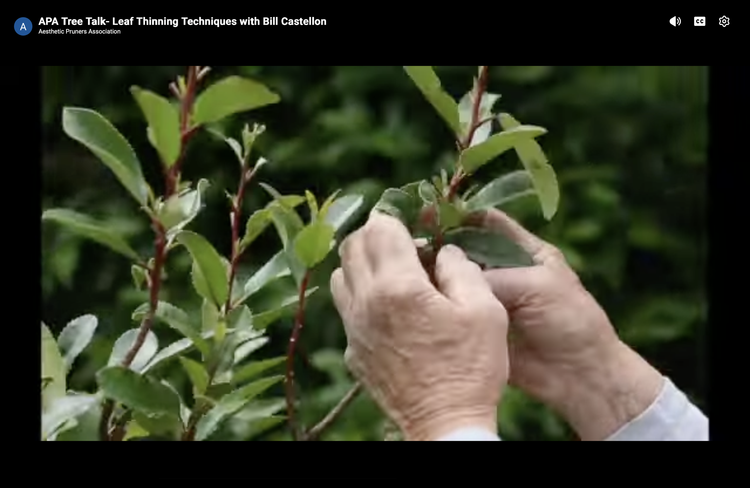
APA Tree Talk: Leaf Thinning Techniques
with Bill Castellon, June 2026
|
Pruning Wisdom from Members"What are your favorite trees to prune in your area this season and why?"
|
|

|
Anne Hunter Associate Member Brooklyn, NY Gardener of the Japanese Garden, Brooklyn Botanic Garden
https://www.bbg.org/ |
|
|
|
|
In early summer, one of the plants I enjoy pruning is the white enkianthus (Enkianthus perulatus), a slow-growing deciduous shrub which is native to Japan. After its display of pendulous clusters of delicate white blooms in spring is done, and the heat, humidity and riotous growth of June has descended into the Mid-Atlantic region, it is great fun to thin crossing and crowded branches to rebalance the form and let light once again bounce through its branches. While the plant fades into a role of more subtle beauty for the summer months, knowing that it will be ready for its brilliant fall display of color is satisfying. As early summer settles into mid-summer, thinning Japanese maples is another favorite seasonal pruning job. While deeply gratifying, this work can also feel overwhelming with the explosion of summer growth. Thinned out branches and leaves allow light and air through sculpted layers, providing glimpses of the elegant branch structure, reshaped canopy, and windows that birds use to seamlessly glide in and out of the tree. Later summer favorites include tackling the puzzle of pruning wisteria. The Japanese wisteria (Wisteria floribunda) that I prune covers a large arbor which serves as essential summer shade covering heavily-used public benches. In late summer, when you can begin to sense a subtle ease in the intensity of light and heat, I’ll prune back and thin the unruly, robust tangle of summer growth, revealing a more refined, neater appearance and a plant that provides dappled rather than dense shade for the fall season. By late summer, I also have my eye on the pines and am mentally pruning them—excited for fall and the work of dormant season pruning. One of the first plants on my mind is the pitch pine (Pinus rigida), a gnarly tree native to fire-adapted ecosystems along the Atlantic coastal region. Its ability to sprout growth from the trunk via basal and epicormic growth makes this a forgiving collaborator in the garden. I have much to learn from the trees and those who care for them.
|
|

|
Allison Levin
CAP #34
Sausalito, CA |
|
|
|
|
Late summer is when I’ll start working on California’s shrubs and trees that are native to the lower elevations (those that aren’t riparian plants or from cold, snowy altitudes). These are the woody plants that put out their growth during winter through spring rains, and whose dormant period is in the (typically) driest part of the year—pruning season! Also, late summer is when most young birds have fledged. Since California native plants are what gardeners use when they want to create habitat for wildlife, I find that there’s often a fun, challenging tension in pruning these plants; the native garden owner’s aesthetic is complicated! What makes a good nesting shrub? How much dead wood can I leave? Where are the berries? Those are the questions I think about, questions that are often in conflict with my impulse to simplify structure or clean up spent flowers. It’s in these gardens that I’m truly a perennial student! At the same time, I want to create a garden of beauty that is at least somewhat accessible, and hopefully inspiring to humans who visit it, who might be inspired to plant a habitat garden of their own.
|
|

|
Matthew Luks
Associate Member
Edenton, NC |
|
|
|
|
Windows—it’s all about windows of opportunity out here in Northeastern North Carolina. Having moved from Durham a few years ago, where I would confidently prune almost anything throughout the summer—minus dancing around drought periods and asphalt islands—it’s been a relearn period of timing and predictive response for what I am pruning. Summers here are hot and either super dry or super wet, with windows of calm between them that, if timed right, allow for the regularly scheduled pruning program. It has reminded me that with the confidence of being a great pruner, there is that intuitive aspect that becomes ingrained in us as we develop our skills and see how plants respond to site specific idiosyncrasies as well as the overall climatic effects of the season. Summer is a tough one here. So I juggle appeasing clients, while at the same time ensuring that introduction of stress or disease is at the lowest threshold it can be for the frequently less than ideal environmental conditions for pruning. It has turned into a brain game on and off the pruning court. That all being said, I still have the tough ruffians of the Southeast that I have come to push limits on pruning, knowing they are forgiving and adaptable. While in central NC, I would prune Japanese maples faithfully all summer, minus a few oddball dry spells. Out here, I am more hesitant, as the sun is hotter and opening the wrong window will not only burn branches but split them within a month. So I stick to ‘feathering’ them out: gentle tip pruning to open small windows and thin the visual weight. Camellia japonica is one of the tough pack. Although waiting until summer to prune them does reduce some flowering, if it is a frequent flier of my annual rounds for a client, then it’s never enough to affect the dramatic visuals of the spring flower show. I have even done reduction pruning of these in the summer, so long as it’s not insanely dry, knowing they flush back fairly quickly. Jumping to the fruit tree world, fig trees are my jam. I love pruning fig trees long neglected or ill-placed next to a home in years past. Yes, again, you reduce one function (fruiting) for this season, but pushing some plants into the summer reliably gives me something I can prune most summers here. These also sprout back very well, even from extreme reduction cuts, so these buddies are all assigned to the early summer task group. All boxwood varieties are another of my summer group. Most clients want them pruned in spring, as they begin their rebellious climb to shaggy domination, but the issue here is that they actually flush again in early summer, two months after their initial flush. So I almost always visit boxwood sets twice a year—in early spring and again in summer. During my spring visit I just shape; my summer visit is my more attentive prune, when I shape and plunge prune to reduce humidity (whitefly) and dieback on the interiors. That’s a glimpse into what’s in my bucket out here in North Carolina for summer pruning!
|
|
Here in Portland, Oregon, there’s a Laceleaf maple on just about every block. Many are quite mature and also previously untouched by a professional pruner, so it is truly a privilege to be asked to shape many of these specimens. When I began my solo pruning business a few years ago, it was the middle of winter, and my first time encountering many of my clients’ trees was during dormancy. Witnessing how the trees responded to my work, and simply seeing them fully leafed out in the summer has always been a thrill—like returning to a friend after several months and saying, “Wow, look at youuu!” With each subsequent growing season, I try to see if I can prune my returning clients’ Laceleaf maples while in “full dress,” and do little to no pruning in the winter. I think the relatively mild climate here allows for much more flexibility in regards to pruning timing. Summer is also a favorite time of mine to prune fruit trees with my colleagues at the Portland Fruit Tree Project. I got my pruning start and initial training with this non-profit through a BIPOC workforce development program called Connecting Canopies. Since I work solo most of the year, it’s refreshing to tend the community orchards with other pruners, collaborating and conferring on various trees and seeing them evolve together over time. One thing I particularly enjoy about pruning fruit trees in the summer is the specific focus on reducing vigor/limiting size while re-leadering and inducing/encouraging fruit production. While I still try to give these trees some aesthetic balance, the pruning is more focused on other aspects that I find rather meditative, engaging my brain in a way that is quite different from how I approach ornamental trees.
|
Open APA Board PositionsAt the upcoming January 2027 APA Annual Meeting we will have 3 open positions of the Executive Board to fill:
President Vice President Member at Large #2
Involve yourself in the APA!
Board members have their fingers on the pulse of the organization. This is your chance to make professional connections and contribute your thoughts and ideas to your organization! Board meetings are held monthly on the 2nd Thursday on Zoom, which means that you can participate from wherever you live. If you would like to consider one of these positions, the board welcomes you to join a board meeting and see the board in action! President (must be a CAP member)Duties of the APA President - 2 year term • Provide executive leadership in the planning process and overall leadership of the APA
• Preside at all Executive Board meetings and the January Annual Membership Meeting
• Act as spokesperson for the APA
• Nominate Standing Committee and Subcommittee Chairpersons who shall be approved by the Executive Board
• Create other special ad hoc subcommittees as needed
• Fill board vacancies as needed with approval of the Executive Board Vice President (must be a CAP member)Duties of the APA Vice President - 2 year term
• Assume the responsibilities of the President in the absence of the President
• Chair the January Annual Membership Meeting and such committees or events as needed
• Lead or participate in APA committees as needed Member at Large #2 (must be either a CAP or Associate member)Duties of the APA Member at Large - 2 year term
• Initiate or assist with Executive Board activities as needed
• Lead or participate in APA committees as needed
_____________________________________________________________ APA Ambassador ProgramThe APA Membership Committee would like to announce our newly-created Ambassador Program. This pilot program will pair new and new-ish APA members with CAP "Ambassadors" who will provide ongoing orientation and guidance for navigating the organization. If you have joined the APA in the past two years and are interested in getting involved with this program, please reach out to: alexsenauke@gmail.com. We have ambassadors waiting to work with you! ________________________________________________________________ Solano Stroll BoothThe APA will once again have a booth at the Solano Stroll, with this year’s event taking place on Sunday, September 13, from 10am–5pm in Albany, California. We’re looking for APA members who are available for a two-hour shift to help staff the booth. Any time available is helpful, but we’re especially looking for help during these key times: 9 – 11 am for set up and initial staffing
12 – 2 pm
4 – 6 pm for close and breaking down the booth starting at 5 pm Typical activities at the booth include promoting the APA, educating people about the benefits of hiring a pro, and even handing out some of your own business cards. Reach out to Jeff Becerra at jeffbecerra@sbcglobal.net for any questions or to share your availability. ________________________________________________________________ APA Website Helpful Info
Where’s My APA Membership Card?
If you have wondered if you have a membership card for the APA—you do! To find it, go to the APA website, log into your account by clicking the “Members” box in the upper right hand corner, click on “Profile,” and scroll to the bottom where you will find your membership card and an option to print it. Your membership card can be used at Hida Tool and Hardware in Berkeley, California, to get a 10% member discount.
|
Other NewsDennis Makishima Zentoku ArticleAn article about the life of Dennis Makishima has just been published on the Zentoku Foundation website. Titled Dennis Makishima: Mr. Omoshiroi, the article by Jennifer Hasegawa is a synopsis of Dennis’s life story, and includes photos and a plug for his book of the same name. The Zentoku Foundation is a non-profit organization that interviews and tells the stories of notable Japanese Americans, Japanese traditions, and Japanese culture past and present.
|
Welcome New APA MembersAssociate MembersRichard Sonne (CA)
Steele Taylor (UT) Affiliate MembersAldrinna Nichols (CA)
Richard Boyle (CA)
Joel Krajewski (CA) Student MembersStephanie Megibben (CA)
Rowdy Jay Stracke (MN) Organizational MembersTrees & Me, LLC - Chad P. Giblin (MN)
|
Committee Chair ReportsCRAFT STANDARDS COMMITTEE
Co-chairs: Allison Levin, CAP #34 and Emily Fronckowiak, CAP #57 Committee members: Dina Blackwell, Grant Foerster, Maryann Lewis, Judy Thomas, and Randall Lee Major events happening since the spring report: Thank you again to the many CAPs who stepped up to act as test administrators for our spring testing event ending in May: Evelyn Borchert, Diana Chamberlain, Ethan Cote, Grant Foerster, Walt Fujii, Emily Fronckowiak, Melissa Hyams, Allison Levin, Maryann Lewis, Bruce Thompson, Peter Quintanilla. We couldn’t do it without you! (If you’re a CAP and curious about becoming a test administrator, please send us a note!) A questionnaire was sent out to all the TAs for feedback on their experience so that the committee may use that information to continue to improve the process. Then the committee took a much-needed break. The committee continues to work on further refinement of testing images along with creating additional testing guidelines. These would be for situations such as English being a second language and scaling to accommodate more applicants. There is even a need to discuss new questions that have arisen regarding accepted portfolio subject matter. We’re continuing the “Why I’m a CAP” promotion to inspire more pruners to become certified by sharing testimonials from CAPs in the APA newsletter. If you would like to share your story, please contact the Craft Standards Committee. The APA Certified Aesthetic Pruner® (CAP) designation recognizes those professional pruners who demonstrate a high level of proficiency when applying the art and science to aesthetic pruning. For this reason, the Craft Standards Committee seeks members whose knowledge and experience will maintain the well-earned reputation of the CAP designation. Do you see events and topics you would like to be a part of? We welcome input and participation from interested members! Contact us at craftstandards@aestheticprunersassociation.org ________________________________________________________________ EDUCATION COMMITTEE
Chair: Carolyn Cooley, CAP #15 Committee members: Evelyn Borchert, Cathy Crystal, Greg Kitajima, Allison Levin, Lara Miranda, Peter Quintanilla, Matthew Taylor, Judy Thomas In June, 18 people attended part two of our Intermediate/Advanced Aesthetic Pruning of Fruit Trees workshop at the Rossmoor Garden Club in Walnut Creek, California. Lead instructors Ann Owen and Evelyn Borchert guided small groups in assessing trees and creating a pruning plan, consulted as they worked, and discussed the results with the group. In July, Joseph Nontanovan, Evelyn Borchert and Dina Blackwell spoke on a New Pros panel on Defining Your Pruning Business. The Education Committee continues our work of planning and hosting engaging and relevant events for APA members and the AP-curious. We cycle through an established set of topics related to the business side of aesthetic pruning, and we’re sprinkling in some one-off events, like the upcoming All Professionals talk “Old Pro/New Place” (September 13)—a panel discussion about starting up an aesthetic pruning business in a new place, or working between multiple places. We also have a couple Tree Talks coming up: arborist John Leffingwell will give a talk on diagnosing tree pests and diseases on October 18, and Eric King, Michael Alliger and Diana Chamberlain will discuss art concepts for aesthetic pruners on November 8. We’ll also host a Coffee Talk in October or November. As always, we welcome suggestions of speakers and topics for Tree Talks and “All Pros” talks. _______________________________________________________________ FINANCE COMMITTEE
Chair: Barbara Eaton, CAP #60 Committee members: Dina Blackwell, Nina Rizzo, Mark Mendell, Jeff Becerra, Helga Mahlmann (volunteer accountant), Audrey Childs (bookkeeper) In the second quarter of 2026, our main income was from educational events, including a little over $500 from Bill Castellon’s Tree Talk on Leaf Thinning Techniques, and about $2,900 from part two of the Advanced Fruit Tree Pruning Workshop at the end of June. Membership dues totaled a little under $2,000. Our CD account earned about $350 in interest for the quarter. Our main second quarter expenses included a partial consultant fee of $2,500 for Kim Andrews, a non-profit consultant who has begun working with the APA on an assessment of our organizational structure; $1,750 in speaker and instructor fees for the Tree Talk and pruning workshop; about $740 in website related expenses; and almost $740 in bookkeeping fees. Anyone interested in joining the Finance Committee is welcome to email Barb at apatreasurer@aestheticprunersassociation.org. _______________________________________________________________ MEMBERSHIP COMMITTEE
Chair: Alex Senauke Committee members: Lara Miranda, Dina Blackwell, Allison Levin, Joseph Nontanovan
The membership committee recently expanded in order to develop our newly-announced pilot Ambassador Program. This program will pair new APA members with CAP "ambassadors" who will provide ongoing orientation and guidance for navigating the organization. If you have joined the APA in the past two years and are interested in getting involved with this program, please reach out to: alexsenauke@gmail.com ______________________________________________________________ NEWSLETTER COMMITTEE
Chair: Dina Blackwell, CAP #53 Committee members: Barbara Eaton, Mariah Guarnaccia We meet virtually to put together content for our quarterly publication. If you have any ideas for stories, or would like to write one yourself, please contact Dina at dinasgardens@gmail.com. The Newsletter Committee would love to get photos from members for the opening image. It could be a seasonal photo that represents the time of year for that newsletter, or just a photo of a nice tree, someone pruning, or a set of before and after pruning shots. Also, we have a column called “Pruning Wisdom” where 2 to 4 pruners answer a question from members. We would love to hear any questions that you would like answered. All of the past newsletters can be viewed on the APA website under the Resources tab, APA Newsletter. _______________________________________________________________ PROMOTIONS COMMITTEE
Chair: Jeff Becerra Committee members: Committee members: Dina Blackwell, Shirley Brewin, Jane Chua-Couzens, Barbara Eaton, Kristen Vetterlein The APA will once again staff a booth at the Solano Stroll. This year’s event takes place on Sunday, September 13, from 10am–5pm in Albany, California. We’re looking for APA members who can spend some time at the booth to promote the APA, educate people about the benefits of hiring a pro, and even hand out a few business cards. Any shift length welcome! Reach out to Jeff Becerra at jeffbecerra@sbcglobal.net for more details. _______________________________________________________________ SACHIKO UMEHARA SCHOLARSHIP COMMITTEE
Chair: Randall Lee, CAP #3 Committee members: Melissa Hyams, Dina Blackwell The APA Sachiko Umehara Scholarship of $500 was awarded to Mariah Guarnaccia in May 2026. She is aspiring to be an aesthetic pruner, and her horticultural goal is to receive the Aesthetic Pruning Award from the Landscape Horticulture Program at Merritt College. The Scholarship Committee of Dina Blackwell, Melissa Hyams, and Randall Lee scored the applicants in March and chose Mariah to be the recipient. The APA Board approved the recipient, and Mashariki White of the Peralta Colleges Foundation awarded the scholarship to Mariah. The application period for the spring 2027 scholarship starts October 1, 2026 and will close on March 1, 2027. If you would like to find out more information about the Sachiko Umehara Scholarship fund, please visit the Scholarships page on the APA website.
|
|
|
|